
AI & Automation
Course Duration:50 Hours
What You Will Learn & Objectives
- Understand the fundamentals of Artificial Intelligence, Machine Learning, and Automation workflows.
- Work with Python libraries for AI such as NumPy, Pandas, Scikit-Learn, and automation toolkits.
- Build intelligent automation scripts to automate repetitive business tasks.
- Develop machine learning models for prediction, classification, and decision-making.
- Learn Prompt Engineering to create smarter AI-powered outputs and workflows.
- Integrate AI tools (LLMs, chatbots, APIs) with real business systems.
- Master data preprocessing & feature engineering for accurate AI models.
- Automate reporting, dashboarding, and data workflows using Python and cloud tools.
- Implement AI-driven solutions for HR, Finance, Sales, and Marketing automation.
- Deploy automation pipelines on cloud platforms using lightweight frameworks.
- Apply Generative AI for text, image, document, and code automation tasks.
- Learn process automation using tools like Selenium, Robocorp, and Python automation libraries.
About Course
This AI & Automation program is designed to teach students how to build intelligent systems, automate business processes, and apply machine learning techniques to solve real-world problems.
You will learn modern AI tools, Python automation, model building, prompt engineering, and end-to-end workflow automation used across industries like IT, HR, Finance, Marketing, and Operations.
The course is suitable for beginners to advanced learners, including students, working professionals, and anyone looking to build a strong career in AI, Data, and Automation technologies.
Course Curriculum
AI Foundations & Python Programming
- Python Basics: Variables, loops, functions, data types.
- Core Libraries: NumPy, Pandas for data handling & automation tasks.
- Python Automation: File automation, email automation, API automation.
- Scripting & Task Automation: Automate Excel, PDFs, system tasks.
Machine Learning & Model Building
- ML Basics: Supervised & Unsupervised learning.
- Model Training: Regression, Classification, Clustering.
- Model Evaluation: Accuracy, precision, recall, confusion matrix.
- Feature Engineering: Data cleaning, scaling, encoding.
Generative AI & Prompt Engineering
- Understanding LLMs: ChatGPT, Gemini, Claude basics.
- Prompt Techniques: Role prompts, system prompts, multi-step prompts.
- Use Cases: Content automation, code generation, document processing.
- AI Integrations: Connecting LLMs with real applications.
Automation Tools & Frameworks
- RPA Concepts: Basics of automation pipelines.
- Web Automation: Selenium-based automation scripts.
- Task Automation: Scheduling, bots, workflows.
- Process Optimization: Trigger-based automation tools.
API Integration & AI Workflows
- REST APIs: API calling, JSON handling.
- Third-Party AI APIs: Vision, text, speech automation.
- Connecting AI with Databases: Automating data updates.
- Workflow Orchestration: End-to-end automation pipelines.
Data Analytics for AI Automation
- Data Exploration: EDA for automation.
- Data Visualization: Matplotlib, Seaborn, Power BI basics.
- Insight Generation: Automated report creation.
- Patterns & Prediction: Identifying trends for automation workflows.
Deployment & Real-Time Automation
- Deploy AI Models: Lightweight deployment concepts.
- Serverless Automation: Cloud triggers & execution.
- Realtime Bots: Chatbots, auto-responders, AI assistants.
- Monitoring & Optimization: Improving model/automation accuracy.
Capstone Projects & Portfolio Building
- End-to-End AI Automation Projects: Business automation, chatbot systems, predictive systems.
- Industry Use Cases: HR automation, finance analytics, sales predictions.
- GitHub Portfolio Setup: Uploading code, notebooks, and models.
- Interview Preparation: AI/ML/Automation questions + case studies.
Requirements
- Basic understanding of computer operations.
- No prior coding or AI experience required (Beginner to Advanced).
- A laptop with at least 8GB RAM (recommended 16GB for AI/ML workloads).
- Stable internet connection for cloud tools, APIs, and automation workflows.
- Basic English communication skills to understand AI & automation concepts.
Material Includes
- Source Code & Automation Scripts for all AI, ML, and automation projects.
- AI, ML & Python Cheat Sheets (Pandas, NumPy, Scikit-Learn, Prompt Engineering).
- Practice Datasets for automation, prediction, NLP, and dashboard creation.
- E-books on AI, Automation Workflows, Machine Learning & Prompt Engineering.
- Access to our exclusive AI & Automation Community for doubt-solving & guidance.
- Interview Preparation Toolkit (AI/ML questions, automation tasks, case studies).
- Project Templates for deploying automation pipelines and AI models.
- Cloud Practice Files for API integration and serverless automation demos.
₹200
₹600 Discount 83% off
Benefits Obtained :
- Webinar Link
- Training Evaluation Test
- Completion Certification
SHARE :
Course related
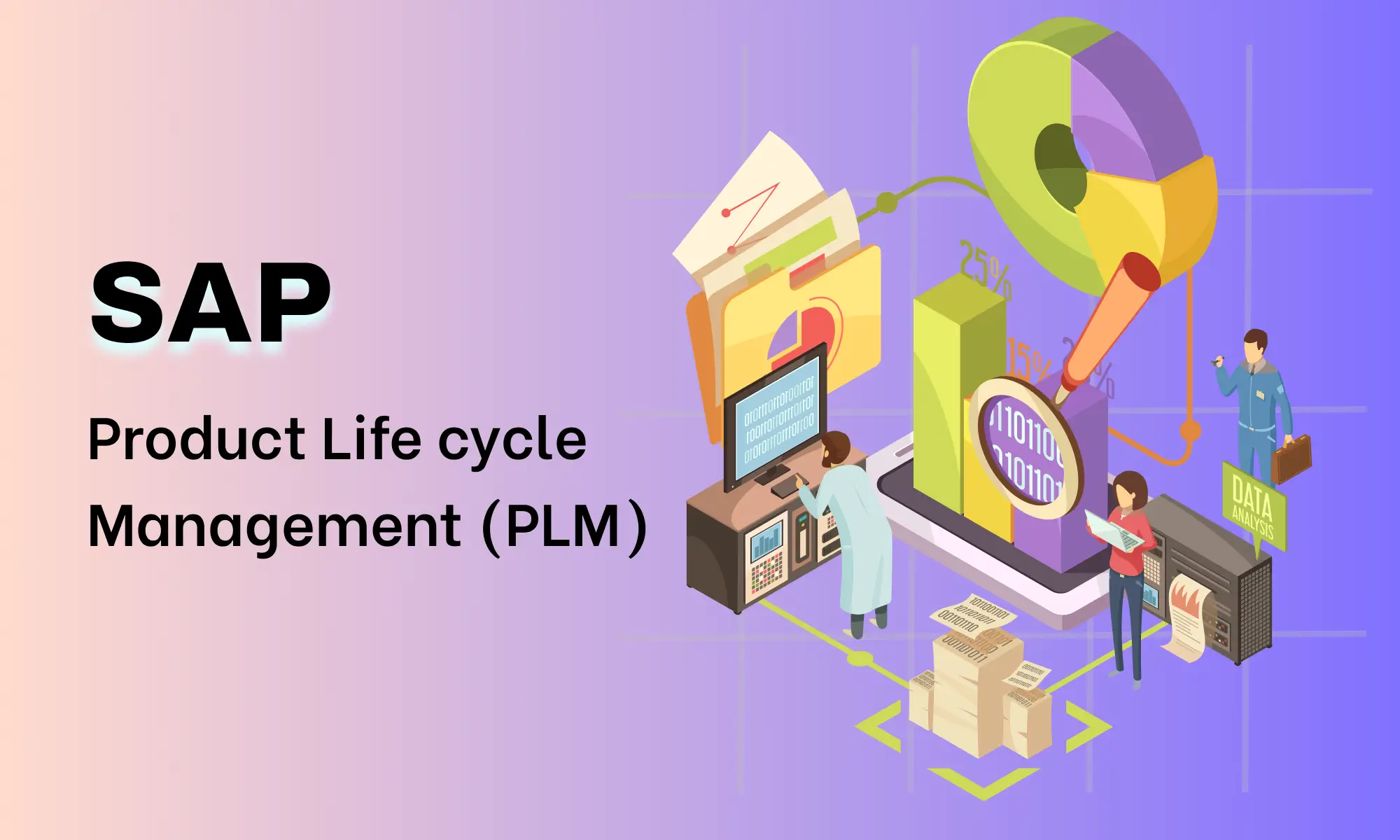
Drive Innovation with SAP PLM Training in Ahmedabad
In the R&D-driven sectors of Gujarat, such as Pharmaceuticals and Specialty Chemicals, managing product data is critical. Gitakshmi Labs offers specialized SAP PLM Training in Ahmedabad that connects your engineering team with the rest of the business. SAP PLM is not just about design; it is about ensuring that what is designed is profitable and manufacturable.
Our course covers the two main pillars of PLM: Discrete Manufacturing (Engineering records, CAD integration) and Process Industry (Recipe Development, Specifications). We focus heavily on Engineering Change Management (ECM), which is crucial for maintaining version control in production. Whether you are a Chemical Engineer or a Mechanical Designer, this course equips you with the skills to manage the “Single Source of Truth” for product data.
This Digital Marketing course provides a complete understanding of how to build, run, and optimize online marketing campaigns.
Students learn SEO, Google Ads, Social Media Marketing, Web Analytics, WordPress, and Content Strategy, along with real-time tools used by top marketing agencies.
Whether you’re a beginner, a student, or a working professional, this course prepares you to become a job-ready Digital Marketer, capable of handling client projects, marketing campaigns, and brand growth strategies.
You’ll also work on live campaigns, assignments, industry tools, and portfolio projects for a real agency-level experience.
Welcome to the Best SAP QM Training in Ahmedabad
The SAP Quality Management (QM) course at Gitakshmi Labs is designed to turn freshers and professionals into industry-ready SAP consultants. Our training program in Ahmedabad covers the entire lifecycle of quality control—from raw material intake to final product delivery. Whether you are a Mechanical Engineer, Production Manager, or a Quality Inspector, this course helps you digitize quality processes using SAP S/4HANA principles.
This course provides in-depth practical knowledge of Quality Planning, Inspection Processing, and Quality Control. Unlike other institutes, Gitakshmi Labs focuses on real-time business scenarios relevant to Gujarat’s manufacturing industries. By the end of this course, you will be able to implement and manage SAP QM systems that comply with ISO standards and ensure zero-defect manufacturing. Join the leading SAP training institute in Ahmedabad to boost your career.
Streamline Logistics with SAP WM Training in Ahmedabad
Efficient warehousing is the heart of the Supply Chain. Gitakshmi Labs offers practical SAP WM Training in Ahmedabad for professionals who want to master logistics execution. While Inventory Management (MM) tells you how much stock you have, Warehouse Management (WM) tells you exactly where it is kept.
In this course, you will learn how to map a physical warehouse into the SAP system. We cover the end-to-end process of creating Transfer Requirements (TR) and converting them into Transfer Orders (TO) for stock movement. We also cover the crucial integration points with SAP MM and SD, which is a favorite interview topic in Ahmedabad’s manufacturing sector. Even with the rise of EWM, knowledge of Classic WM is essential for supporting existing SAP landscapes.

The SAP S/4HANA Production Planning (PP) course provides a detailed understanding of manufacturing processes and production management in SAP.
Learners will explore how to plan, execute, and monitor production using SAP’s integrated business platform.
This course helps you master the end-to-end flow of production, from material planning to final product delivery. With hands-on exercises, you’ll gain the confidence to configure production structures, run MRP, and manage order processing efficiently.
It’s ideal for manufacturing professionals, engineers, and consultants aiming to build or enhance their careers in production planning and control using SAP.
The SAP Ariba Sourcing Functional course gives learners complete knowledge of how sourcing events are designed, executed, and reported within the SAP Ariba Sourcing module.
You will learn how businesses:
- Create sourcing strategies
- Invite suppliers
- Evaluate bids
- Award contracts
- Analyze sourcing performance
The course is ideal for:
Procurement professionals, SAP functional consultants, supply chain executives, sourcing analysts, and MBA students looking to build skills in digital procurement transformation.